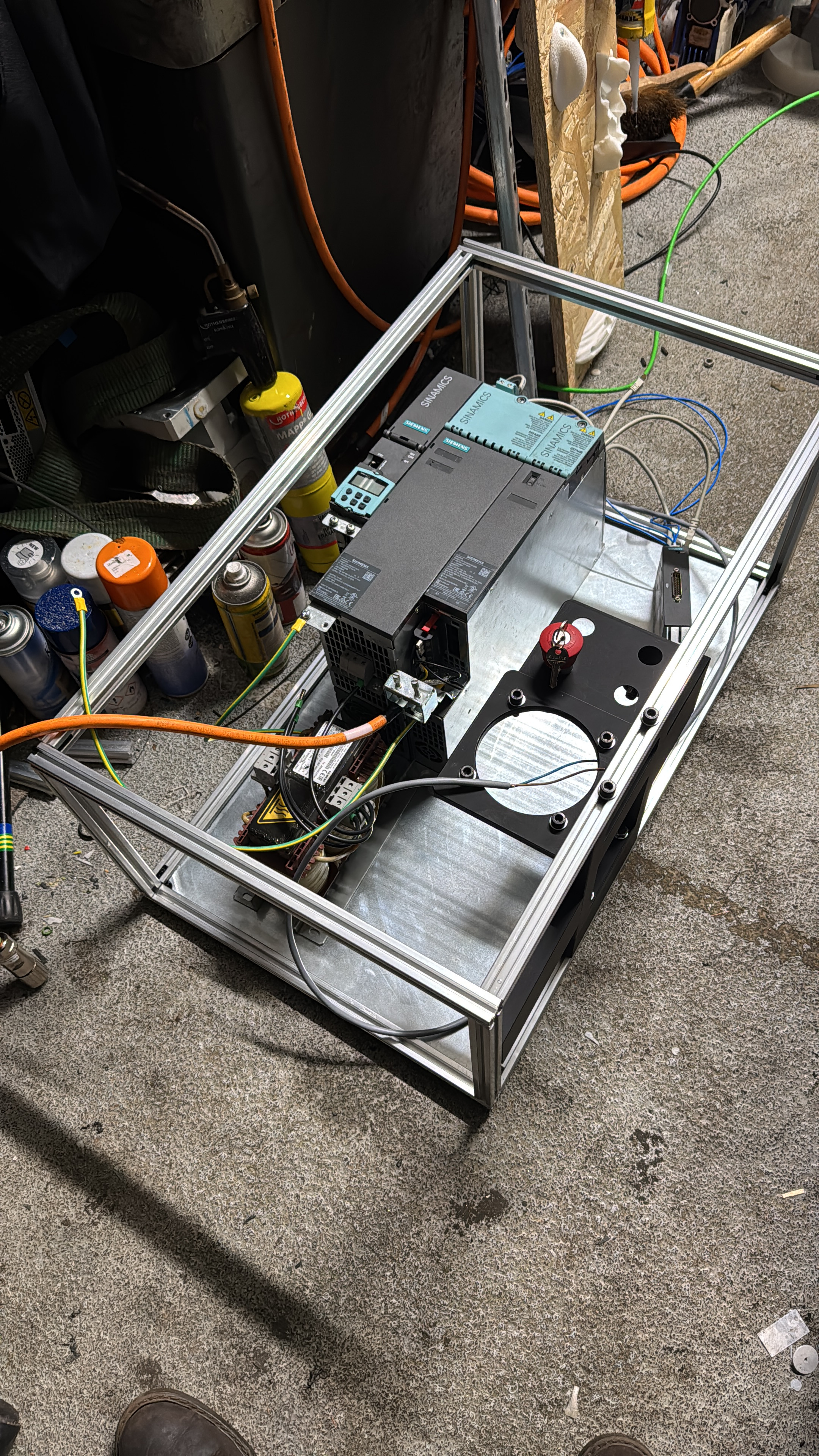
Siemens motion control is a specialism, not a checkbox.
Getting an S120 system running in a controlled environment is one thing. Getting it running reliably in a production machine — with real loads, real faults, and maintenance teams who will inherit it — is another. That gap is where most motion control problems live.
From first power-on to acceptance sign-off.
My Siemens motion work centres on the S120 multi-axis drive system, including the CU320 control unit and EtherCAT-based axis configurations, through to single-axis S210 servo systems and the broader SINAMICS range.
Engagements cover new machine bring-up, axis configuration, motor identification and safe motion setup; fault diagnosis including intermittent drive faults and EtherCAT communication issues; software development on existing hardware without needing a machine to be available; and structured acceptance testing with documented test criteria.
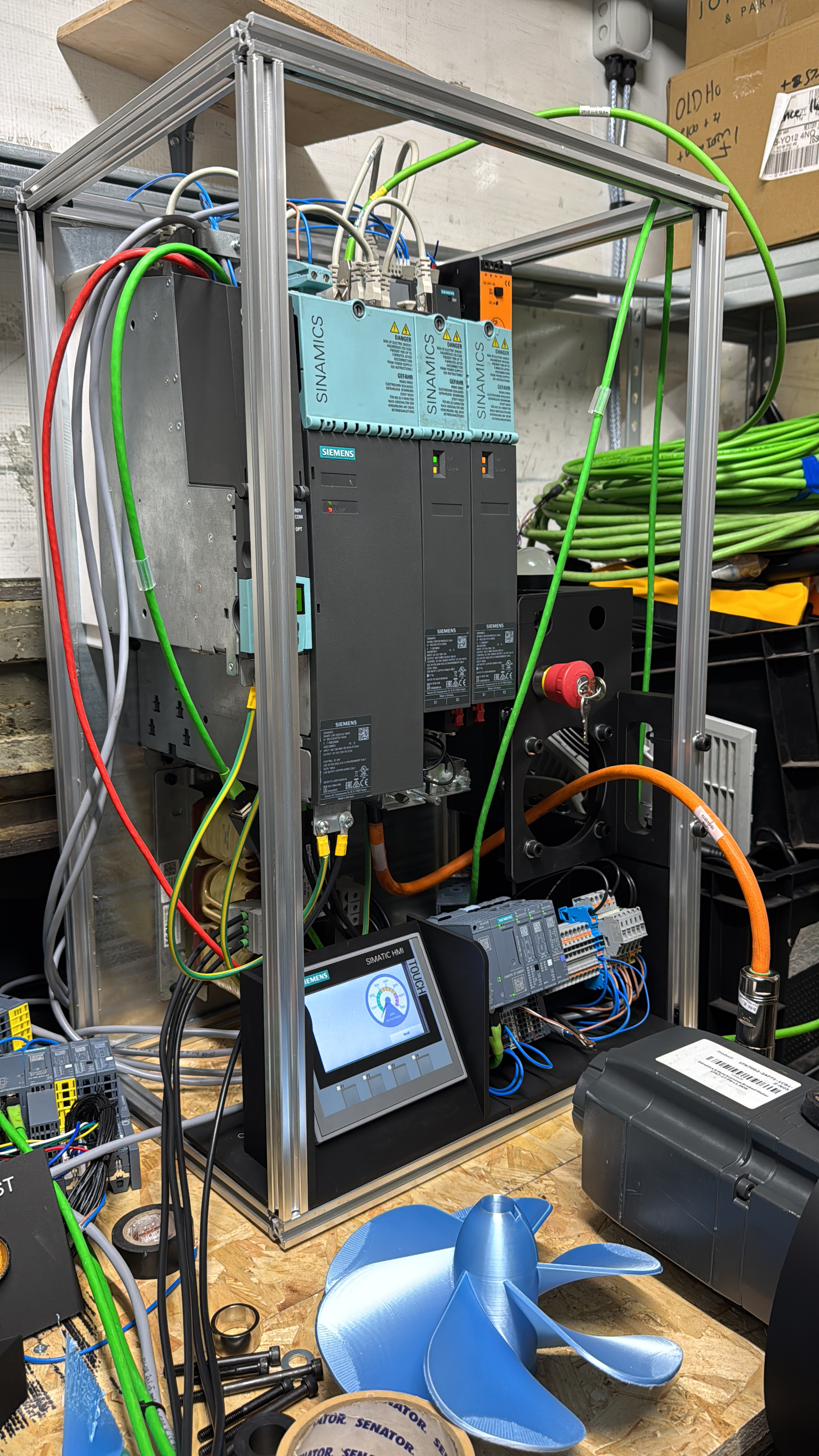
Bring-up and commissioning
- Axis configuration and topology setup from scratch or from a reference project
- Motor data entry, encoder setup and drive optimisation
- Safe motion configuration — STO, SS1, SLS — verified against the machine safety concept
- Functional motion sequences tested and documented before handover
Fault diagnosis
- Systematic isolation of intermittent faults without disrupting production further
- EtherCAT communication issues, encoder errors, thermal and overcurrent patterns
- Root cause documentation so the same fault does not recur without being understood
- Recommendations for parameter adjustments, firmware, or hardware where relevant
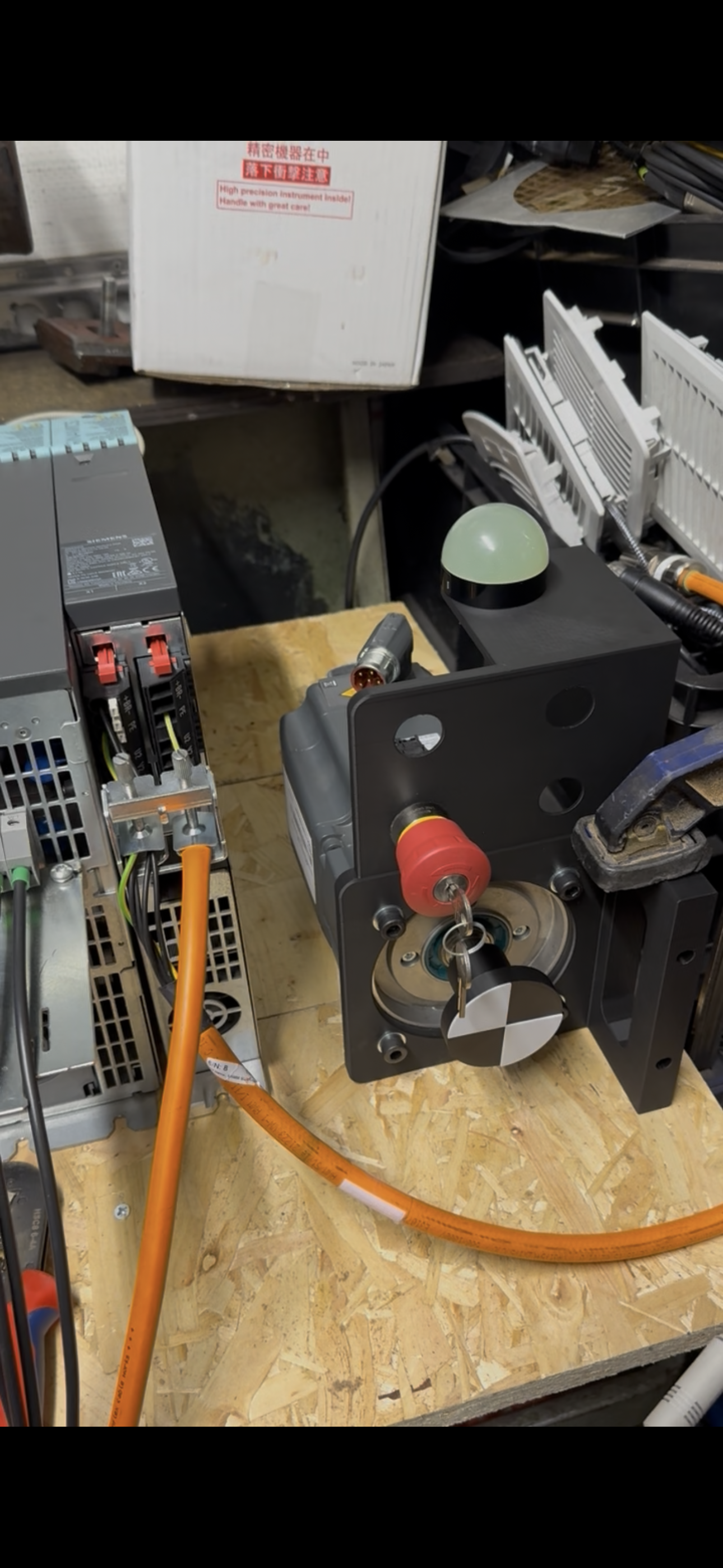
A working development and demonstration platform, not a showroom prop.
Unison Ltd were experiencing intermittent issues with the Siemens EtherCAT card fitted to their CU320 unit — the kind of fault that is difficult to isolate on a production machine without risking further disruption. We built a portable S120 demo case specifically to loan to Unison as a controlled test and development environment, allowing their team to investigate the fault without touching live hardware.
From there, the rig became a permanent internal platform. Clients can trial software on it before committing to hardware. We develop new control approaches on it before they go near a production environment. And when we attend a site or trade show, we bring it — a working S120 system with live HMI screens and real drive behaviour that makes a sharp contrast against most existing control cabinets.
What the rig is used for
- Isolating and reproducing drive faults in a controlled environment
- Client software trials before hardware is committed to
- Internal development of new control and HMI approaches
- On-site demonstrations comparing drive behaviour and HMI quality
- Training on real Siemens motion hardware
Wind tunnel — an unexpected application
We built a wind tunnel for F1 in Schools (now STEM Racing) car testing and sponsor UK competition teams. It runs directly off the S120 demo rig — real analog input logging, controlled fan speed via the drive, and live data readout. We bring it to trade shows as a working exhibit: motion control, analog data acquisition, and HMI integration in a context anyone can immediately understand.
A real engineering application built around the demo rig — and brought to trade shows as a working exhibit.
The wind tunnel tests scale car models for teams competing in F1 in Schools (now STEM Racing) competitions. It was designed as a way to sponsor UK teams by offering access to proper test equipment, and it runs entirely off the S120 demo rig — fan speed controlled via the drive, analog pressure and velocity inputs logged in real time, data displayed live on the HMI.
Bringing it to trade shows means there is always something running, measurable, and explainable. It demonstrates motion control, data acquisition and HMI integration in a context that anyone from a technical director to a sixteen-year-old engineering student can engage with.
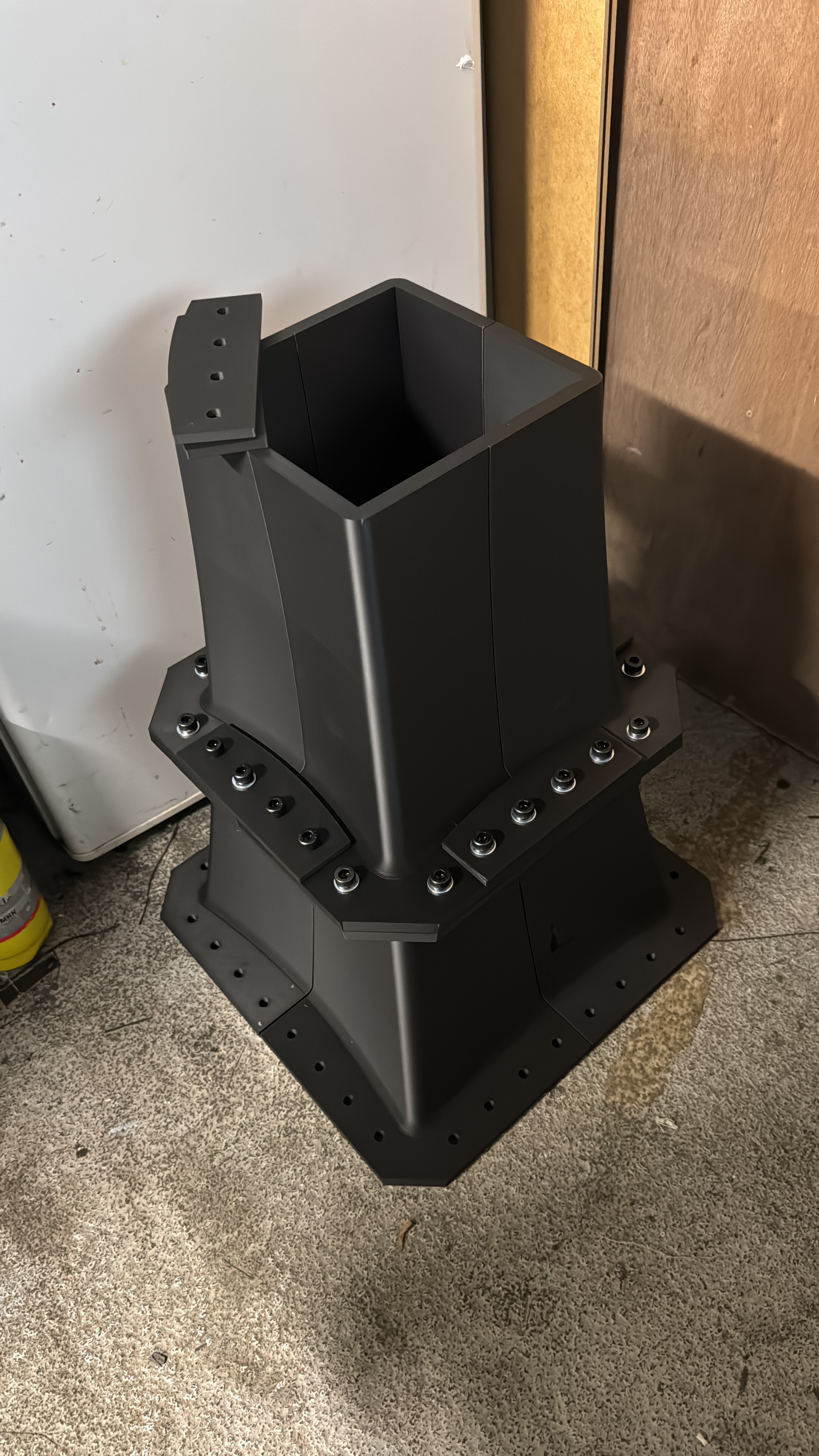
What the tunnel demonstrates
- Closed-loop speed control via Siemens S120 drive
- Analog pressure and velocity input acquisition
- Real-time HMI display of test data
- Portable enough to attend trade shows and competitions
International scope
I am UK-based and work on-site internationally. If a machine is being built or commissioned outside the UK, that is a straightforward conversation — it does not complicate the engagement. I have commissioned equipment in the USA and am comfortable travelling for the right project.
Tell me about your drive system
Whether you are starting a new commissioning, chasing an intermittent fault, or building something from scratch and want an engineer who has done it before — describe the hardware, the situation, and what you are trying to achieve.
Related services: PLC Retrofit & Re-ControlsFANUC Robot IntegrationTraining & Consultancy