George Pickering
Controls • Motion • Robotics • Stage engineering
Electrical cabinet and retrofit work
Electrical • Scarborough, UK • Worldwide

Electrical work designed for fault-finding, not just first power-up.

Panels, rewires, safety-aware enable chains and field wiring built so the machine state, device references and documentation stay aligned. The goal is a cabinet and wiring system another engineer can understand quickly under pressure, not a neat-looking install that becomes opaque later.

Main priority Electrical work that stays readable when a fault happens at the worst time.
Best use Retrofits, panel builds, rewires and machine support where architecture and traceability matter.
Engineering value Clear enable chains, faster fault isolation and less friction during commissioning.
Typical crossover Electrical delivery that directly supports PLC logic, HMI alarms, drives and field devices.

How the electrical layer affects the whole machine

Good electrical delivery is not just neat trunking. It is architecture, identification and documentation arranged so the panel behaves predictably, the fault path is visible and the real build matches what the drawings and software imply.

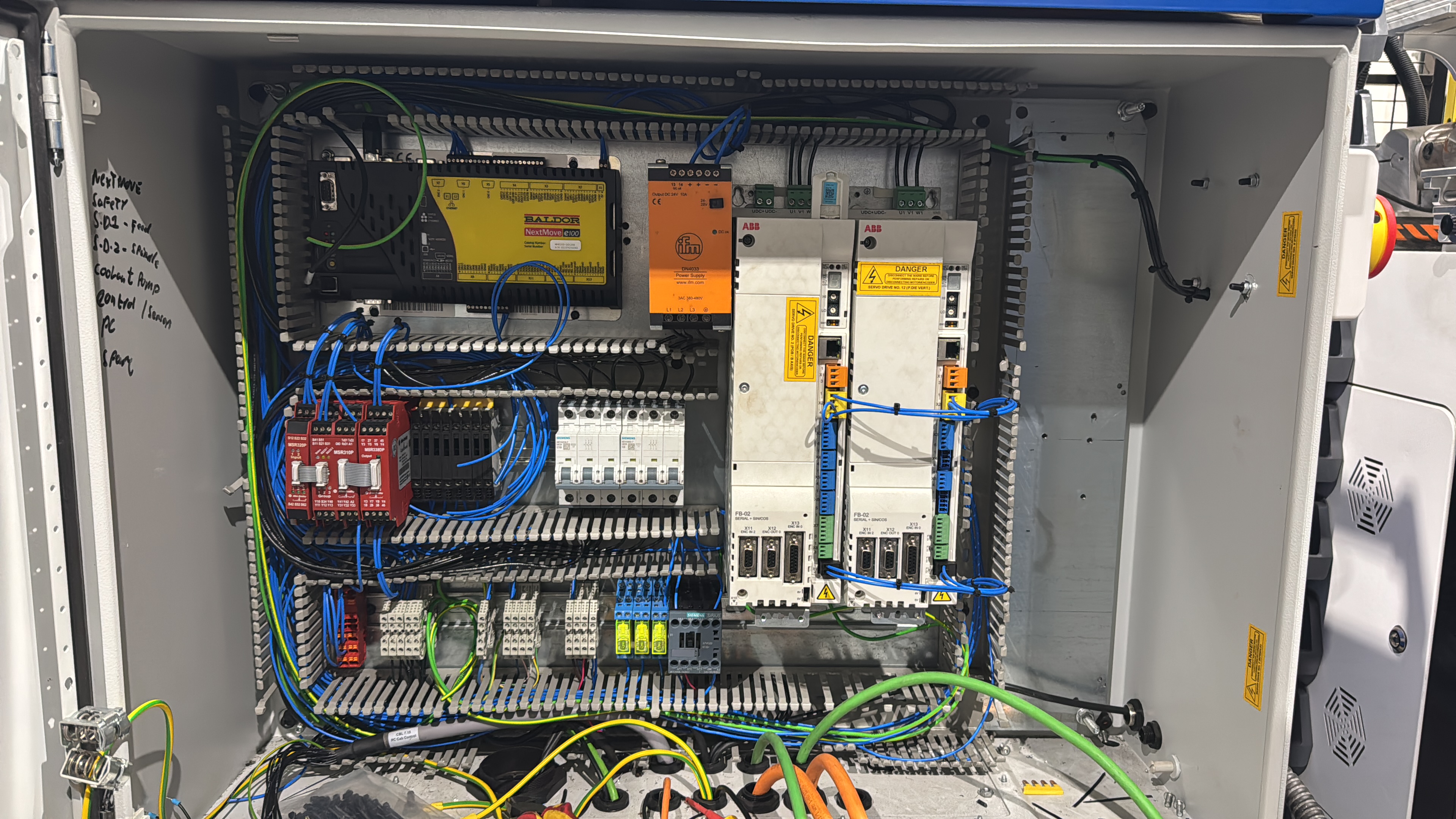
Control cabinet and field wiring
Approach

Electrical work that is easy to understand under pressure.

A good cabinet is not only physically neat. It is logically laid out so the person fault-finding later can separate power, control, safety and enable behaviour quickly and trust the labels, schedules and drawings.

That means routing and identification designed for the real machine, with enough structure that later additions and service work do not destroy traceability.

Clear architecture
Traceable wiring
Deterministic recovery
Supportable handover

What I deliver

Electrical work that reduces commissioning friction and makes future support more straightforward.

Architecture and scheme

Power distribution, control architecture and IO structure defined so the machine has clear operating boundaries.

Panel builds and rewires

New panels or rebuilds with maintainable layouts, access-first routing and sensible segregation for troubleshooting.

Safety and enable chains

Safety-aware permissives and enable logic designed so faults are obvious and recovery is deterministic.

Field wiring and devices

Sensors, actuators and operator devices wired with identification that matches terminals, drawings and PLC tags.

Commissioning readiness

IO maps, direction checks, interlock testing and bring-up structure that reduces downtime and guesswork on site.

Handover pack

As-built notes, labelled wiring, backups and documentation that leaves the machine supportable after delivery.

Typical outputs

Traceability matters as much as the wiring itself.

Electrical delivery is only complete when the naming, labelling, IO schedules and backups line up with the real hardware. That is what makes future diagnostics faster and stops the handover pack becoming decorative.

The exact scope changes with the project, but the standard stays the same: a clear structure that another engineer can follow without relying on assumptions.

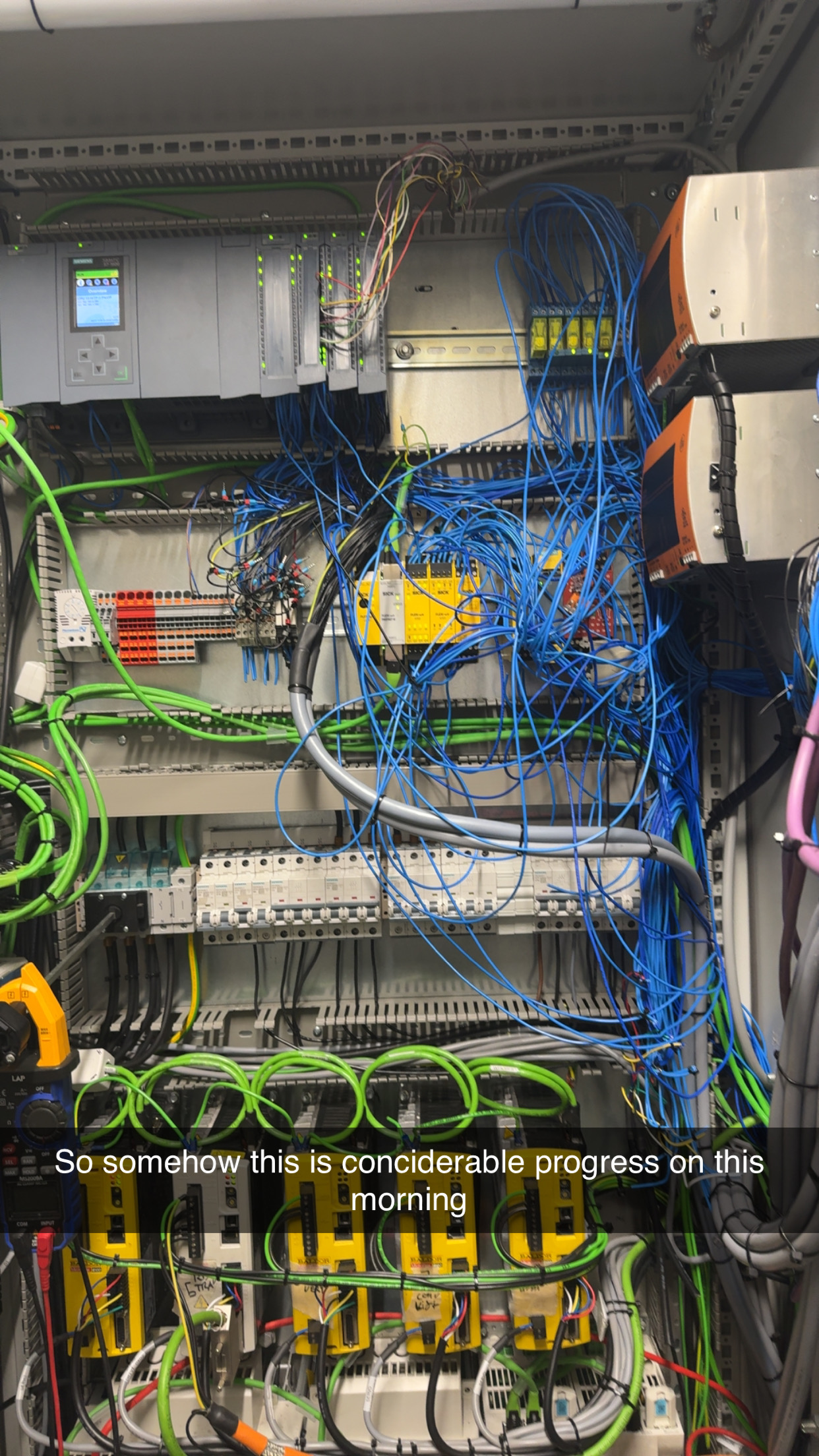
IO rack and electrical architecture

Documentation and traceability

  • IO schedules aligned to devices, terminals and cable IDs
  • Device identification and labelling that matches drawings and code
  • As-built notes or formal updates depending on scope
  • Backup and export packages for PLC, HMI and drive configuration where applicable

Safety approach

  • Clear separation between safety permissives, drive readiness and run commands
  • Defined stop and abort behaviour so recovery is understandable
  • Commissioning checks for safety-related paths where the project scope requires it

Standard builds can use external safety hardware, with failsafe variants where the application needs it.

How I work

Define operating states and recovery behaviour first, then build the electrical structure around those rules.

1) State definition

What the machine must do, what should drop, and how recovery is expected to behave are made explicit early.

2) Architecture

Power, control, safety and IO structure are arranged so the panel has logical boundaries and serviceable layout.

3) Build discipline

Identification, routing and terminal strategy are chosen to support commissioning and future support.

4) Handover quality

Backups, notes and references are prepared so the result does not depend on tribal knowledge after install.

Linked case studies

Engineering-focused write-ups. Some identifying details may be omitted where required.

What good electrical work changes

Cleaner panels, faster fault paths, calmer site work.

The payoff from good electrical delivery shows up when someone else has to use it. Clear labels, consistent IO references, accessible layouts and defined enable behaviour all reduce the time spent guessing and increase the time spent fixing the real issue.

That is the difference between a cabinet that only looks finished and one that genuinely supports the machine.

Less guesswork
Faster diagnostics
Better uptime
Stronger handover
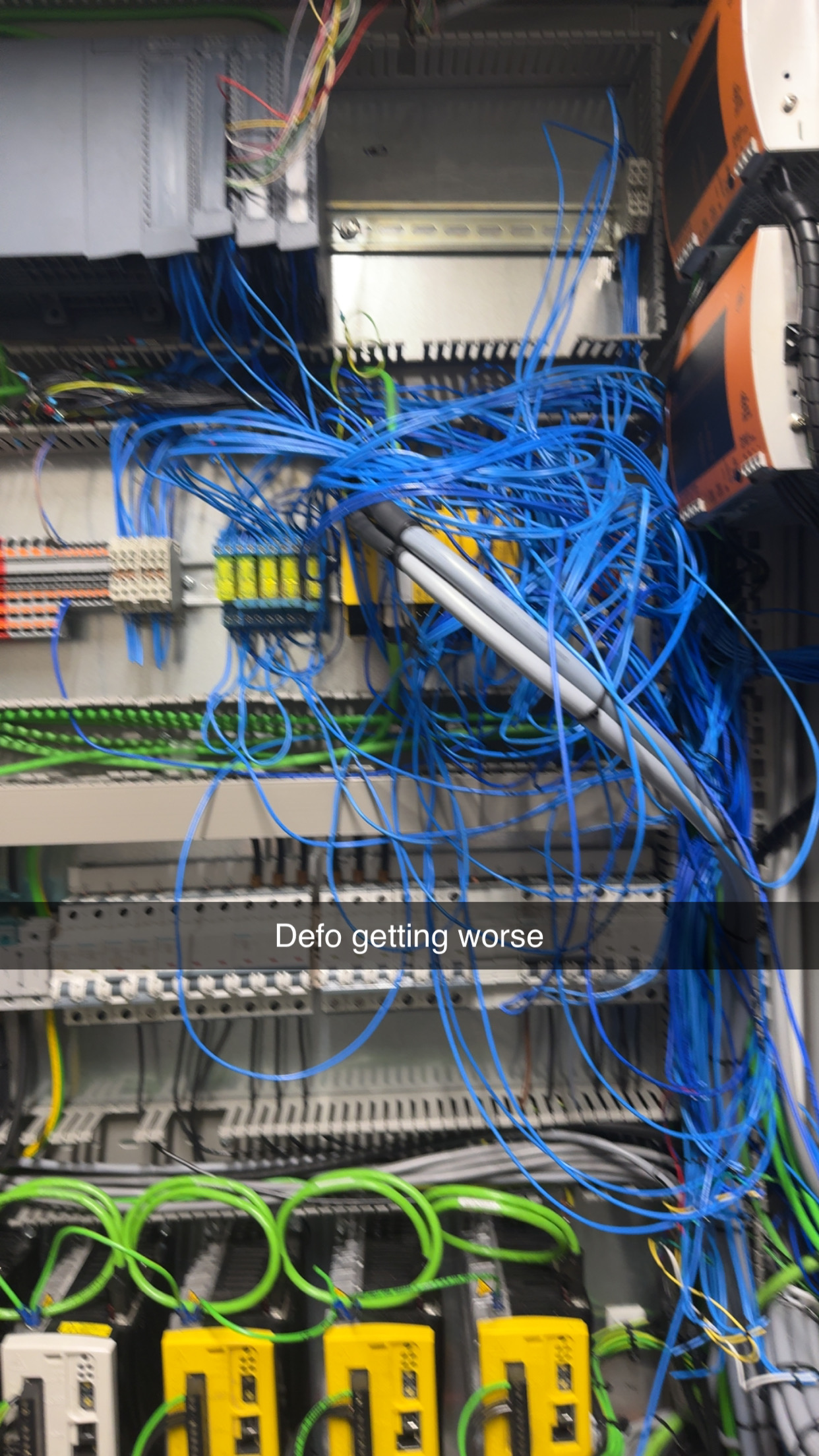
Trunking and electrical installation detail
Enquiries

Send the machine, the current issue and the commissioning window.

The most useful context is the current problem, the target PLC or drive stack if known, and any existing drawings, panel photos or downtime constraints. That is usually enough to define the most practical next step.

Electrical panel and retrofit work