A lot of real engineering understanding comes from building, testing, breaking, fixing, and proving things work under real conditions — not theory alone.
I learned more in six months of hands-on commissioning than in the years of formal education that preceded it. That's not a criticism of education — it's an observation about where engineering judgement actually forms.
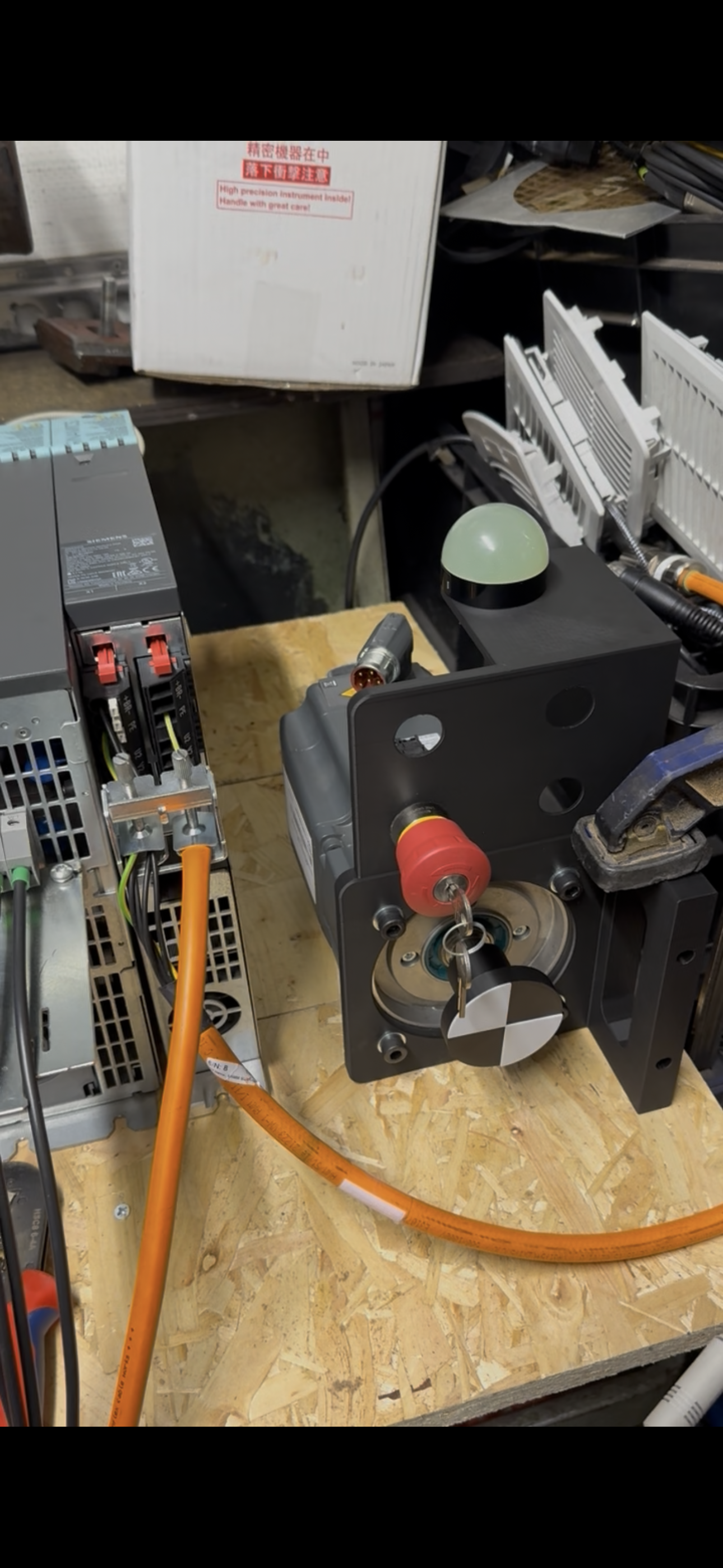
The S120 demo rig
Building the Siemens S120 demo cases forced me to understand the S120 platform in a way that reading the manuals never would have. When you have to wire it, commission it, debug it when something doesn't work, and then explain it to someone else — you learn it properly.
The rig has been wrong in interesting ways. A missing parameter. A wiring mistake in the STO circuit. A motor encoder that wasn't configured correctly. Every one of those errors taught me something that I now look for when commissioning real machines.
"The fastest way to understand a new platform is to build something that can break — and then fix it."
Why test rigs matter
For an OEM or a machine builder, having a test rig is the difference between commissioning on a customer's machine and commissioning on your own hardware first. The customer's machine is the wrong place to discover that a particular encoder configuration causes a fault at a specific velocity.
Test rigs also compress learning time. An error that would be hard to diagnose in the field — where the machine is running and the pressure is on — becomes interesting in a workshop environment where you can try things, check the manual, and understand what actually happened.
The habit I'd recommend
If you're learning a new PLC platform, drive family, or robot controller — build something. It doesn't have to be big. A DIN rail with a power supply, a PLC, and a few IO devices is enough to run real code. Simulators are useful, but the moment you add real wiring and a real power supply, a different kind of attention kicks in.
The CNC cell, the press rig, the S120 demo cases — all of them started as learning exercises that became production assets. That's the best outcome for a test rig: you learn from it, and then it keeps earning its place on the bench.