The gap between humanoid robot demos and production deployment is closing faster than most industrial engineers expect. What does that mean for automation strategy now?
Every few months there's another video of a humanoid robot doing something impressive. A warehouse task. A light assembly operation. Walking up stairs. The reaction from the industrial automation community is usually split between genuine interest and polite scepticism.
The scepticism is reasonable — industrial robots have been doing structured, repeatable tasks reliably for decades. A general-purpose humanoid that can do anything sounds like it belongs in science fiction. But the question worth asking isn't "can it do everything?" — it's "can it do this specific task reliably enough to be useful?"
What's actually changed
The progress in manipulation and dexterity over the last three years has been substantial. The combination of improved actuators, better sensors, and large-scale training data has moved these systems from impressive demos to genuinely capable tools in constrained environments.
The applications that work first are predictably the ones where the task is repeatable, the environment is semi-structured, and the tolerance for cycle time variation is reasonable. That covers a lot of light assembly, packing, and material handling — tasks where traditional fixed automation is over-specified and a human is currently doing the work because flexibility is needed.
"The first useful applications won't replace fully automated lines — they'll fill in the gaps that fixed automation never addressed."
What it means for integration engineers
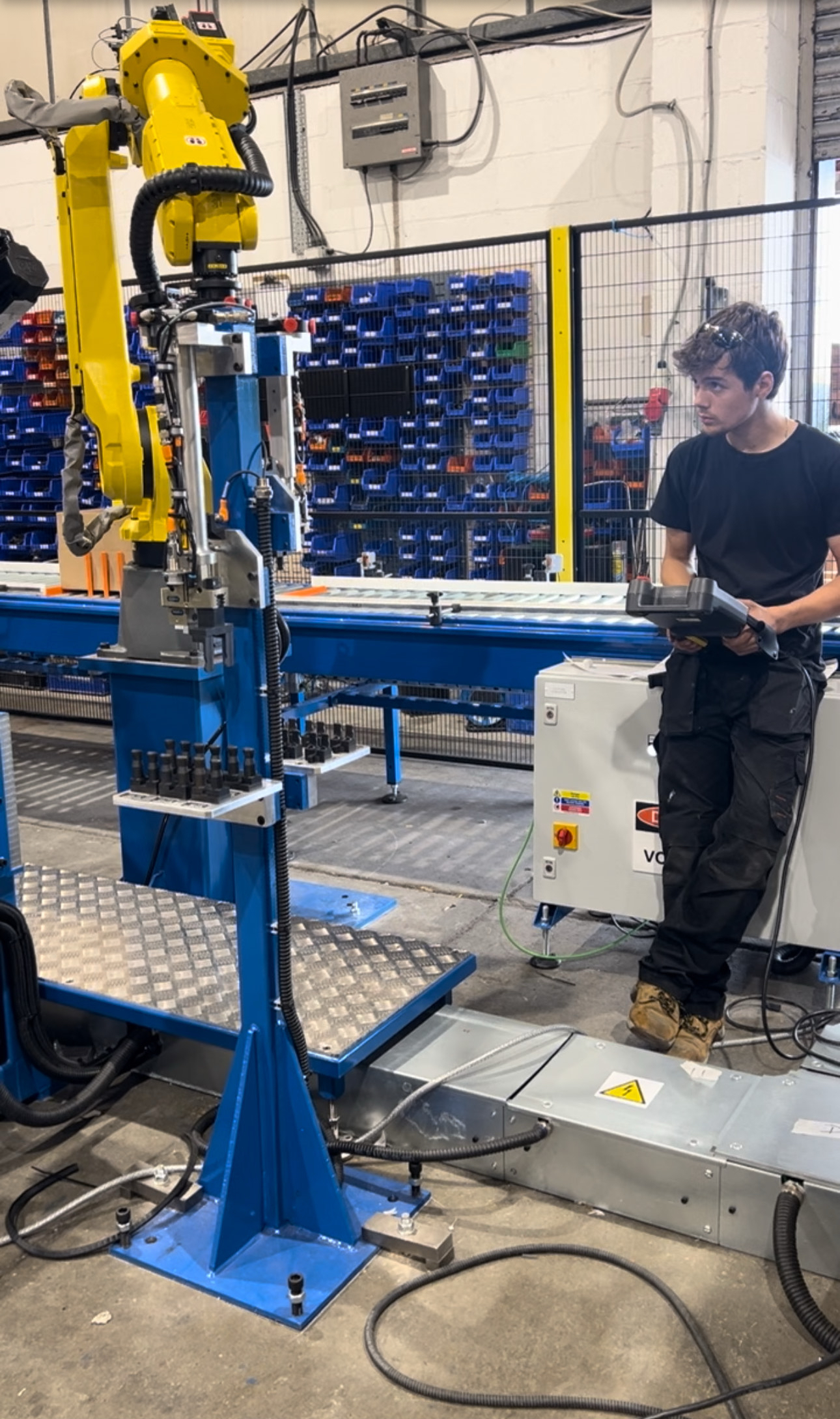
If you're doing FANUC or Kuka integration today, humanoid platforms will eventually become part of the same landscape — different hardware, but the same fundamental challenge of integrating a robot into a cell, defining the handshakes with surrounding equipment, and building a system that recovers predictably from faults.
The skills that transfer are the systems thinking skills — how to define what a robot needs to know, how to structure the state machine, how to handle exceptions safely. The specifics of teach pendant programming will change, but the engineering discipline underneath it won't.
Worth watching closely. Not worth panicking about — but worth understanding before the first integration project lands on your desk.